

Bed bugs have become one of the most persistent urban pests worldwide, with infestations rising in dense cities due to increased travel and pesticide resistance. According to the U.S. Environmental Protection Agency (EPA), these insects are resilient because they can survive for months without feeding and hide in extremely small spaces, making them difficult to eliminate without structured intervention.
Effective control requires more than surface cleaning or store-bought sprays. Many cases require structured intervention such as professional bed bug removal, where trained technicians combine science-based detection, heat application, and chemical strategies to disrupt the insect’s life cycle. Experts at the National Pest Management Association (NPMA) note that integrated pest management remains the most reliable approach for long-term eradication, especially in multi-unit housing environments.
How Bed Bugs Hide and Spread
Bed bugs (Cimex lectularius) are small, flat insects that feed on human blood at night. Their biology is central to why infestations escalate quickly. They hide in mattress seams, furniture joints, electrical outlets, and even behind wallpaper. Because they are nocturnal and highly adaptive, early detection is often difficult.
Research from the Centers for Disease Control and Prevention (CDC) highlights that bed bugs are not linked to poor hygiene, which is a common misconception. Instead, they spread through travel, used furniture, and shared living environments such as dormitories and apartments.
Detection: Finding the Hidden Infestation
Accurate detection is the foundation of any successful treatment. Professionals use a combination of visual inspections and advanced tools to locate infestations.
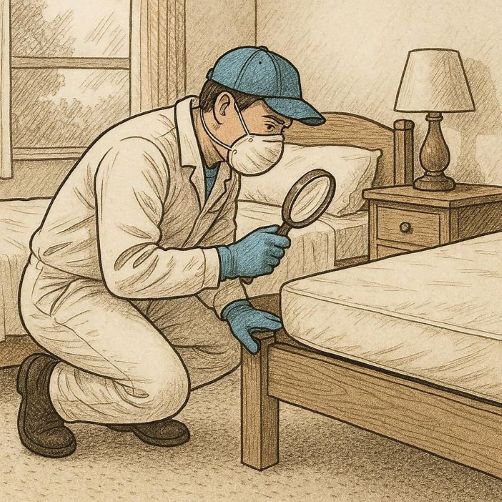
- Visual inspection: Technicians examine mattresses, furniture, and wall crevices for live insects, shed skins, and dark fecal spots.
- Canine detection: Specially trained dogs can identify bed bug scents with high accuracy, even in early-stage infestations.
- Monitoring traps: Interceptor devices placed under bed legs help confirm active movement patterns.
These methods are often combined to reduce false negatives. Studies published in the Journal of Economic Entomology show that canine detection can achieve accuracy rates above 90 percent when properly trained and handled, making it a valuable tool in complex environments.
Heat Treatment: Using Temperature as a Weapon
One of the most effective non-chemical methods is heat treatment. Bed bugs die when exposed to sustained temperatures of around 50°C (122°F). Professional teams use industrial heaters and sensors to raise room temperatures evenly.
The process requires careful monitoring. Heat must penetrate furniture, walls, and hidden spaces where eggs may be present. The NPMA reports that heat treatments, when properly applied, can eliminate all life stages of bed bugs in a single session, although follow-up inspections are still recommended.
Despite its effectiveness, heat treatment demands precision. Uneven heating or rushed procedures can allow survivors to remain, which is why trained pest control specialists supervise the entire process.
Chemical Treatments: Targeting Resistant Populations
Chemical control remains a key part of modern pest management, especially in large or heavily infested spaces. However, bed bugs have developed resistance to some older insecticides, which has led to the use of more targeted formulations.
Common chemical classes include pyrethroids, desiccants, and insect growth regulators. Each works differently:
- Pyrethroids: Affect the nervous system but may be less effective on resistant strains.
- Desiccants: Such as silica gel, damage the insect’s outer shell, causing dehydration.
- Growth regulators: Disrupt development and prevent immature bugs from reaching adulthood.
Research from Purdue University Entomology Department emphasizes that combining multiple chemical classes reduces resistance buildup and improves long-term control outcomes. This multi-layered strategy is often integrated into broader extermination plans.
Integrated Pest Management: A Combined Strategy
Modern bed bug control rarely relies on a single method. Instead, professionals use Integrated Pest Management (IPM), which combines inspection, heat, chemical treatment, and preventive steps.
This approach also includes environmental adjustments such as reducing clutter, sealing cracks, and encasing mattresses, along with maintaining sanitation practices highlighted in health benefits of a clean home. According to the World Health Organization (WHO), integrated pest management is considered a sustainable method because it minimizes chemical exposure while improving effectiveness.
Education plays a major role as well. Residents are often advised on how to identify early signs of reinfestation and how to avoid bringing pests into clean environments through travel or secondhand furniture.
Why Professional Intervention Matters
While DIY solutions may offer temporary relief, they often fail to reach hidden colonies or resistant eggs. Bed bugs reproduce quickly, and a single surviving cluster can restart an infestation within weeks.
Professional pest control services bring together scientific tools, regulated treatments, and experience in behavioral patterns of infestations. This structured approach increases the likelihood of full eradication compared to uncoordinated home treatments.
Conclusion: Science-Driven Control for Long-Term Relief
Bed bug management is no longer about simple spraying or surface cleaning. It is a science-driven process that blends heat technology, targeted chemical use, and precise detection methods. When these strategies are applied together, they significantly improve success rates and reduce recurrence.
Approaches like structured bed bug extermination services reflect how pest control has evolved into a disciplined field grounded in entomology and environmental science. As urban populations continue to grow, understanding these methods helps students and readers appreciate the complexity behind what may seem like a small household problem, but is in fact a sophisticated biological challenge.
Ultimately, effective control depends on timing, method selection, and expertise. When science is applied correctly, even one of the most persistent household pests can be managed with lasting results, especially when supported by professional pest control treatment and integrated extermination strategies.