




There are times when children are called upon to apply more than just memorized information for academic entrance assessments. They may require interpreting given information, recognising patterns, problem-solving, and explaining thinking. These are closely related to the skills fostered in the science classroom. Here, students are routinely engaged in watching evidence, posing questions, making observations, discovering patterns, and drawing inferences.
If a family is preparing a child for a selective school assessment, a grammar school entrance tutor could offer guidance and structure. Tutors or mentors assist in identifying areas that benefit from further practice.
Education and Critical Thinking
Check below:
Looking Beyond Memorization
While rote-learning facts may be helpful at times. At other times, it is important that academic problem-solving involves applying what students have learned in a new context. For instance, it’s not the same to know a mathematical rule as it is to know when and how to apply it. When introduced to this change, children can be encouraged to put into words what they think is the difference between memorizing and applying.
Science as a Problem-Solving Model
It is beneficial to use scientific thinking when asking difficult questions.
1-Observe
One of the first things to consider is to do thorough research on the information available. A student who is trying to solve an academic problem is in a similar situation. But first needs to know what information the question contains before determining what to do next. Often a student will look for an answer without noticing all the relevant information.
2-Make a Possible Explanation
When the information is reviewed, students might think of explanations or approaches. This can be making a hypothesis in a science experiment. It might be a strategy for solving the problem in mathematics or reasoning. The basic idea is to consider before reacting.
3-Test the Idea
A suggested solution can then be tested. If the answer doesn’t seem to be correct, the student may review the process and repeat. This is a very important academic principle. It is a lesson in learning to change one’s strategy after having made a mistake.
Developing Mathematical Reasoning
Mathematics is not just the end product of a number!
Read the Problem Thoroughly
 It is often a challenge for students to start calculating before they have really understood what the question is asking. High-quality problems can be easier to deal with if children can first identify what information is given and what they want to find out. And then, they will think about how they might attempt to solve the problem.
YOU MAY ALSO READ: How Math Tutoring Can Foster Scientific Thinking
Assemble Verbal Reasoning Skills
Here’s how:
1-Look for Relationships
Verbal reasoning can be the ability to recognize a relationship between words or ideas. Children can develop these skills whilst comparing, contrasting, and making links in their explanations. These activities help to stimulate flexible thinking instead of rote learning.
2-Learning Through Patterns
Patterns are found in mathematics and science.
3-Predicting What Comes Next
Once an identified pattern is found, students can make a prediction. They can then assess the accuracy of the prediction based on the information they go through. This is a straightforward exercise that will help children observe, reason, and support with proof.
Encourage Curiosity at Home
Learning can occur anywhere but at a desk.
Take Opportunities to Make Everyday Activities Learning Moments
Measurements and ratios can be introduced through cooking. Shopping includes mental arithmetic and costs. Observation and classification can be stimulated on nature walks. Concepts of shapes, balance and structure may be introduced during building activities.
These experiences show academic skills are related to everyday experiences.
Learning From Incorrect Answers
Errors are part and parcel of the process of scientific inquiry and education.
Treat Errors as Information
Scientists don’t just scrap an experiment if it doesn’t work out as they had expected. They look to find out what may have led to the result. Children can also have a similar attitude towards mistakes in schoolwork. Wrong responses may reveal a lack of understanding, calculation mistakes, or missed detail.
Developing Time Management
Academic tests can consist of several questions that must be done within a time limit.
1-Accuracy Comes First
As children get used to the process, timed practice can be gradually introduced. This will help keep children from rushing through the questions in order to get through them quickly.
2-Practise Making Decisions
One aspect of time management is the choice of length of response on a challenging question. The type of assessment may require the student to decide whether the problem needs a deeper analysis. Or, if the problem is more practical, to proceed and revisit it later. This is a skill that takes practice to develop.
Preparation for Success – Building Confidence
Here’s how:
1-Repeated Exposure Supports Familiarization
The aim is not to make all the problems predictable but to get children to develop strategies for dealing with unfamiliar problems.
2-Encourage Independent Thinking
An adult can help a child without having to solve all of their problems. Allowing children sufficient time to think and try to give an explanation for their thinking can help them to become more independent.
Developing Skills Beyond An Entry Test
Academic preparation is not one exam, but the best preparation is the best. Science is a great example since it allows one to be curious and also to think with evidence. This attitude can be carried over to mathematics, reading, technology, and everyday decision-making.
Conclusion
The practices of scientific thinking can be used to improve academic entrance preparation. It includes careful observation, asking questions, recognizing patterns, testing ideas, and learning from errors. These skills are not just for children to learn to be scientists. Unfamiliar academic challenges can be more manageable with critical thinking and problem-solving and can allow for increased independence.
Structured preparation can help lead the way, and day-to-day activities can be used as added opportunities for reasoning. If academic growth can be conducted in the context of play, rest, and curiosity, children have the chance to develop skills. Those skills are more than just those that are being tested on an entrance exam.
The ultimate objective is not just to educate children to provide answers. It is to enable them to be thinking learners who will not give up easily when they do not know the answer.

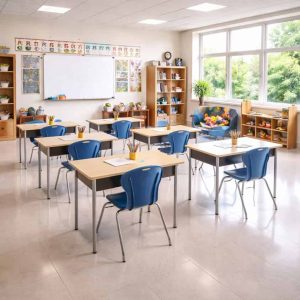 When people think about school cleanliness, they often picture wiped desks, sanitized bathrooms, and tidy hallways. Floors don’t always get the same attention, yet they should, which is why partnering with a reliable tile cleaning service is so important for maintaining hygienic learning spaces. Floors cover the largest surface area in any school building. Students walk, sit, spill, and sometimes even lie on them. What happens on the floor affects the entire learning environment. Clean floors are not just about appearance. They shape health, safety, focus, and even respect for the space.


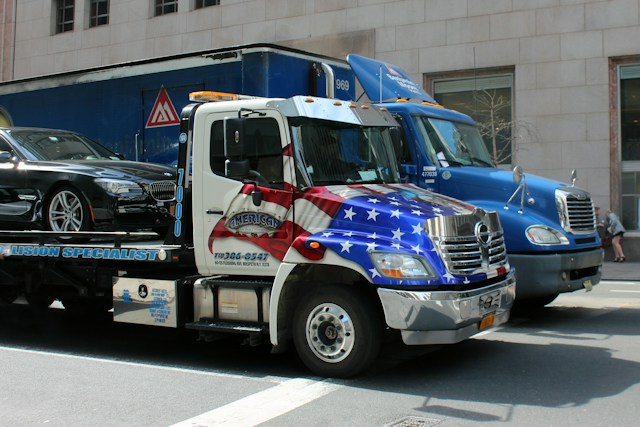
 In today’s fast-paced world, efficiency is key in every industry, and towing professionals are no exception. With the increasing demands of 24/7 roadside assistance, it’s crucial for tow truck operators to have the right tech solutions to maximize their efficiency. Thankfully, advancements in technology have provided an array of tools that can streamline operations and enhance customer satisfaction. It’s essential for towing companies to navigate the digital landscape effectively to ensure their success and attract new customers.

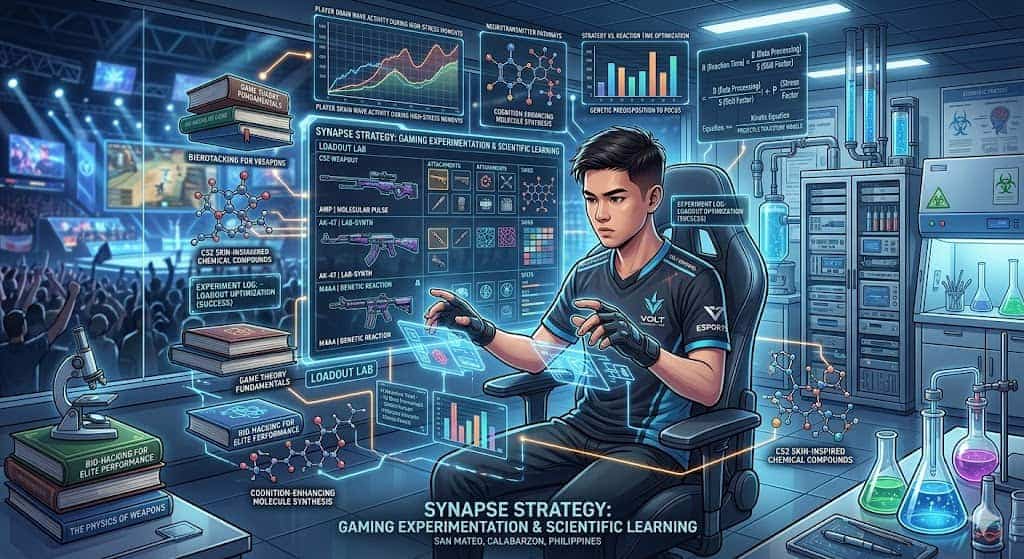
 Games are entertainment. A lot of personalities and characteristics are being revealed through games. Why? Because you might be playing because you just enjoy it, you want to bond with your friends, you might just want to follow a trend, or of course, you want to win and be known as one of the best gamer.

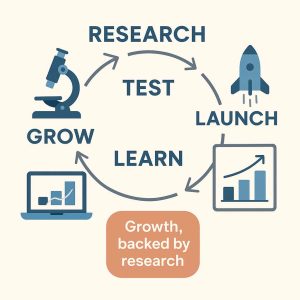 Early-stage growth looks different for every small business, but entrepreneurship researchers keep circling back to the same handful of patterns. These patterns are not fast tricks or hidden tactics, they are repeatable behaviors and formation decisions that consistently give young organizations a better chance at gaining traction and surviving their most vulnerable years. When data is viewed as a whole, a practical picture forms: small businesses tend to grow through smart resource stacking, customer-first testing, operational discipline, and gradual scaling that protects momentum without overextending budgets. Even community-centered platforms reinforce this, including community-centered platform resources from Stand With Main Street, which support founders and charities with business-focused toolkits, templates, and a guide-driven path to launching and growing with clarity instead of chaos.
 Chinese clothing for women has a long and colorful history. From the flowing Hanfu robes of ancient dynasties to the elegant Qipao of the 20th century, these garments tell a story about the country’s culture, identity, and progress. In today’s world, where modernization and technology are moving fast, science and education play a big role in helping preserve and promote these traditional styles.
 Touch is one of our most fundamental human needs. From the moment we’re born, physical contact plays an important role in emotional regulation, stress relief, and healthy development. Platforms like OPCMD help connect users in Korea to professional massage and wellness providers, making access to these vital services easier and more trustworthy.





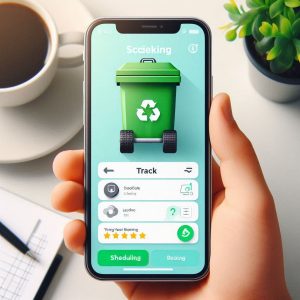 One of the most significant developments in this realm is the use of artificial intelligence and machine learning algorithms to identify and categorize various types of waste. By utilizing image recognition technology, cutting-edge applications can quickly analyze discarded items and determine whether they belong in a landfill, recycling bin, or donation center. This automation allows for faster sorting, reducing the time spent manually examining each piece of junk. Consequently, rubbish removal services can operate more efficiently, minimizing the costs associated with labor and disposal while maximizing their overall effectiveness.
 When it comes to rubbish removal, many find themselves at a crossroads: should they tackle the task themselves or hire professionals?

 Science and education are integral parts of our lives. They drive progress, inspire innovation, and shape the future. On the other hand, vintage trailers by gtservices vintage trailers evoke a sense of nostalgia and adventure. They remind us of simpler times and the joy of exploration. Combining these two seemingly unrelated areas can lead to unique and enriching experiences.

 The art of glass polishing stands out as a fascinating intersection of science and skill. This process, which might seem simple at first glance, involves a deep understanding of materials and techniques, making it an intriguing subject for anyone interested in science, education, or even taking on a new DIY project.